
Can You Notarize an Electronic Signature? Here is Everything You Need to Know
7 mins
Electronic signatures can be notarized mainly through Remote Online Notarization (RON), which uses secure digital tools and video verification. While legally recognized in many jurisdictions, some documents are excluded, and compliance requirements vary. The process ensures identity verification, tamper-evident records, and audit trails, making notarizations secure, efficient, and legally valid.
Imagine you’ve just finished preparing an important contract or legal document. You hit “send” to get it signed electronically, only to remember it also needs notarization.
Suddenly, questions start piling up: Is it even possible? What rules apply? How can you do it without printing, scanning, or mailing anything?
For businesses and individuals who rely on speed and convenience, this can quickly become a frustrating roadblock.
In this SignWell article, we’ll guide you through the essentials of notarizing electronic signatures, how they work, which documents qualify, key legal considerations, and best practices.
But first…
At SignWell, we’ve helped over 65,000 businesses securely sign and manage more than 10 million documents. With years of experience in eSignatures, digital workflows, and notarization processes, we understand the challenges our clients face. This expertise enables us to provide clear, practical guidance on safely and effectively notarizing electronic signatures.

Before we dive into whether notarization works for electronic signatures, it’s important to understand some key concepts that underpin digital signing and notarization.
While often used interchangeably, electronic signatures and digital signatures are different.
eNotarization refers to notarizing a document in electronic form. Both the signer and the notary use digital tools, and the notary applies an official electronic seal. In traditional eNotarization, the signer still appears physically before the notary; the difference is that the document and signatures are digital.
RON takes electronic notarization a step further by eliminating the need for physical presence. Signers and notaries connect through a secure live video call. The notary verifies identity, witnesses the signing, and applies their electronic signature and seal remotely. This method provides convenience, accessibility, and legal compliance in jurisdictions that permit RON.
Building on the concepts of eNotarization and RON, the short answer is: yes, but typically through Remote Online Notarization (RON) in the United States. This method allows a notary to verify a signer’s identity and witness their signature using secure digital tools, even when the signer isn’t physically present.
RON follows the same legal principles as traditional notarization, providing the same authenticity and legal weight. The difference is convenience: the entire process, identity verification, signing, and application of the notary’s electronic seal, can be completed entirely online.
Electronic notarization is legally recognized in many regions, but the rules that govern it differ depending on the jurisdiction. While a notary’s role: verifying identity, witnessing signatures, and preventing fraud, remains the same, the way these duties are performed digitally is defined by specific laws and regulations.
As discussed earlier, electronic notarization can be conducted in person (eNotarization) or remotely (RON). However, Remote Online Notarization (RON) is the most common method used today.
Here’s how the process typically works:
The signer or sender uploads the document (PDF, Word, etc.) to a secure RON platform. Fields for signatures, initials, and dates can be pre-designated, and templates allow for quick preparation of frequently notarized documents.
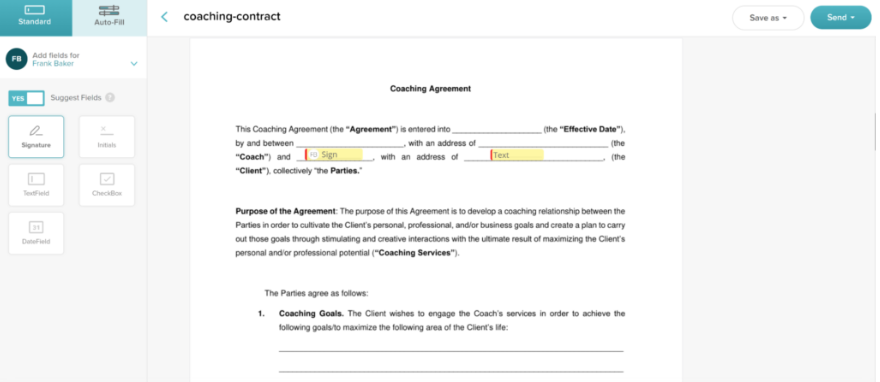
SignWell makes this step even easier. You can upload your file, drag-and-drop signature fields, and share a secure link, all before connecting with a notary for the live video session.
Before signing, the signer must verify their identity:
The signer and a commissioned notary meet via secure video call, fulfilling the legal requirement of “personal appearance.”
After signing:
The notarized document is finalized in a tamper-evident format, with copies shared with the signer. The platform securely stores:
These records are retained for legal purposes, often for several years, ensuring a fully verifiable notarization process.
Complete notarizations anytime, anywhere, eliminating travel, scheduling conflicts, or mobility barriers. Remote parties can participate seamlessly.
Digital notarization platforms offer strong security measures, including encrypted communications, tamper-evident seals, and multi-factor authentication.
For example, e-signature platforms like SignWell automatically generate a tamper-evident record for every document, logging viewer and signer activity to provide a clear legal history.

Many sessions also include secure video recordings, providing a legal record often stronger than paper.
Transactions that once took days can now be completed in a single online session, often under 30 minutes, accelerating real estate closings, business deals, and other time-sensitive documents.
Saving on travel, printing, and courier fees, electronic notarization can significantly cut costs, especially for lenders, law firms, and businesses handling high volumes of documents.
Electronic notarization works for a wide range of documents:
While electronic notarization and Remote Online Notarization (RON) offer convenience and security, their use is not universal and comes with important constraints:
Not all states or countries allow electronic notarization or RON for every document. Laws vary by jurisdiction, and even where RON is authorized, requirements differ. A notarization is generally valid if the notary is located in a jurisdiction that permits RON and follows that jurisdiction’s rules.
Some documents are often excluded from electronic notarization, including:
Not all notaries are authorized to perform electronic or remote notarizations. Requirements may include:
It’s also important to ensure your document is ready for the notary. Not all documents require formal notarization; for many agreements, a legally binding e-signature from a compliant platform like SignWell is sufficient, saving time and cost.
A successful electronic notarization depends on reliable technology:
Notarizing electronic signatures doesn’t have to be complicated or time-consuming. With Remote Online Notarization, you can complete legally valid notarizations entirely online, saving travel, time, and hassle while maintaining the same security and legal credibility as traditional notarization.
SignWell makes the process seamless by combining secure e-signatures with organized workflows, tamper-evident audit trails, and easy document preparation. Basically, SignWell ensures your documents are ready for notarization and compliant with legal standards, giving you confidence every step of the way.
Get started today by creating a free SignWell account.
 .
.businesses served
customer support satisfaction
documents signed